Adrienne Outlaw's sculptures investigate relational ecologies by examining the ways material, spatial, and social relationships shape collective life.
Through her national artist-led initiative, Make Waves, she partners with river cities to create large-scale sculptural environments where people gather, connect, and practice interdependence by balancing care for ourselves, one another, and the Earth.
Each installation transforms public space into a place where relationships form naturally through shared experience. Ecological stewardship becomes a shared practice grounded in those relationships.
Since its launch, Make Waves has been presented in St. Louis, Nashville, Grand Rapids, and Detroit through partnerships with museums, universities, festivals, airports, and civic organizations.
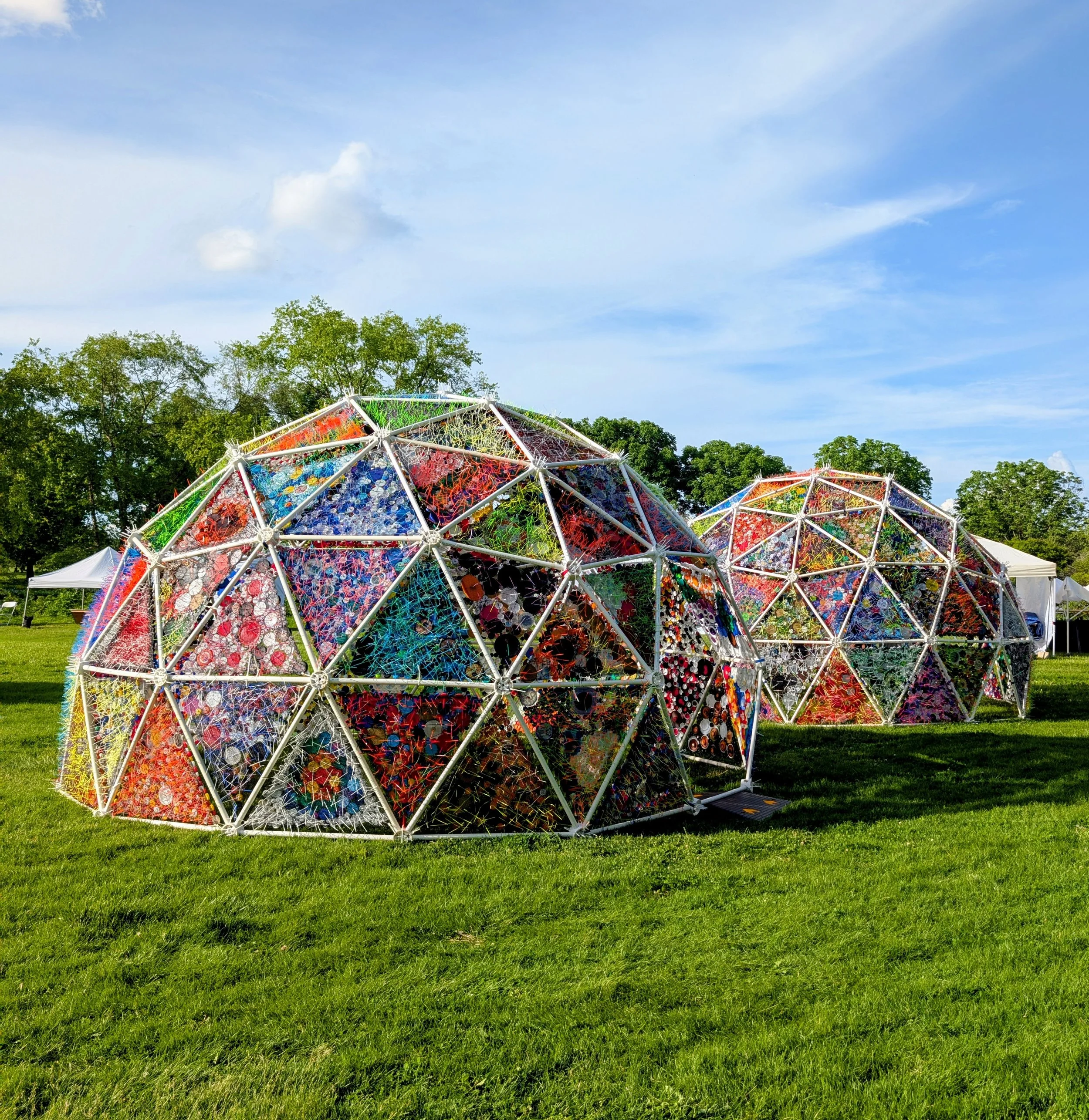
Double Bloom is a large-scale participatory installation consisting of two walk-in geodesic domes constructed from thousands of recycled plastic bottle caps collected through community engagement. Presented as the featured artwork for the 2026 St. Louis Earth Day Festival in Forest Park, the installation transforms post-consumer waste into luminous spaces for gathering, reflection, and shared experience. Through color, light, and collective making, Double Bloom invites visitors to consider how individual actions connect to larger environmental systems. Throughout the festival, Double Bloom functioned as social infrastructure, providing vibrant gathering places for performances, storytelling, conversation, music, and spontaneous encounters among visitors who might not otherwise have met.
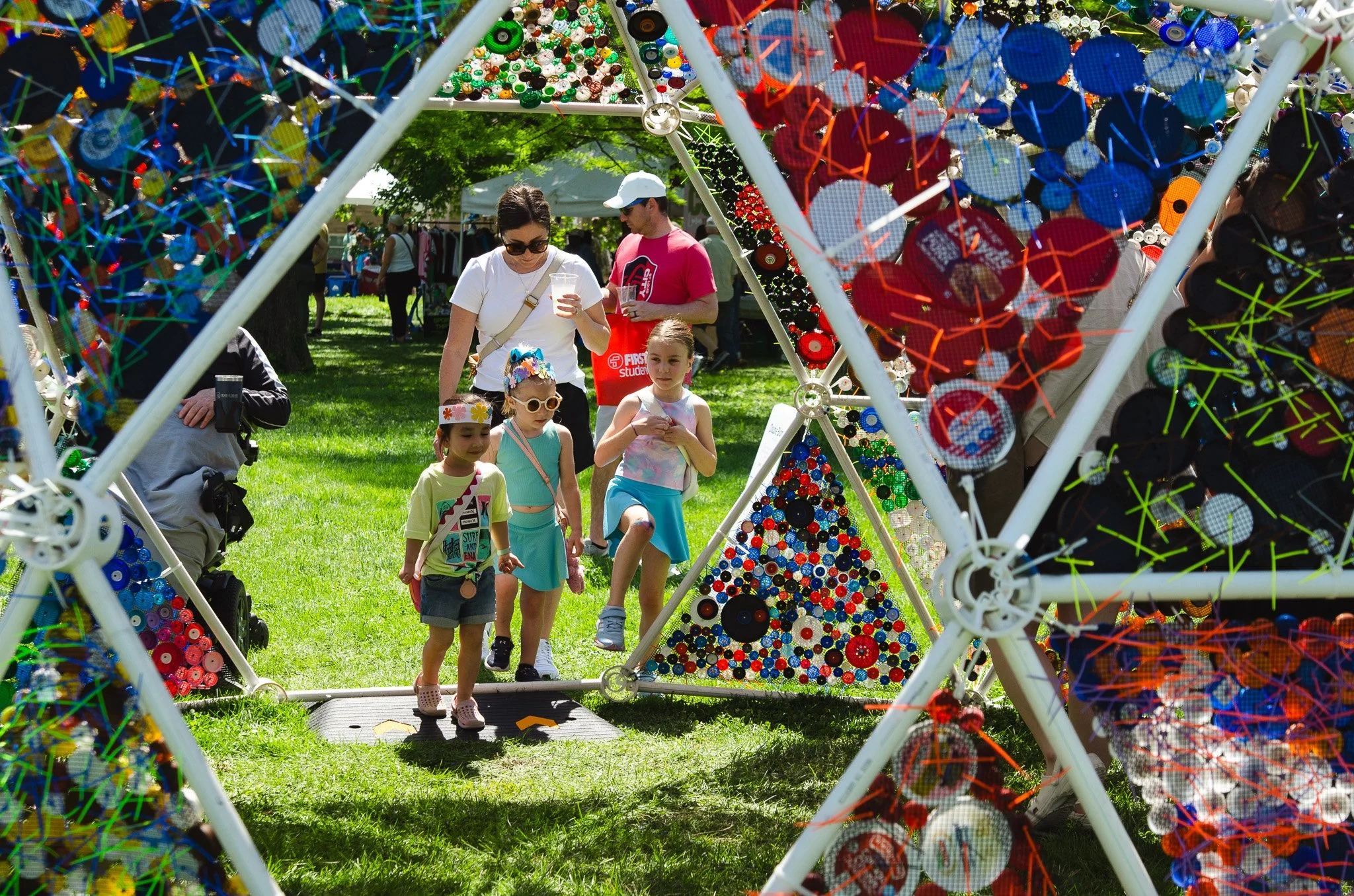
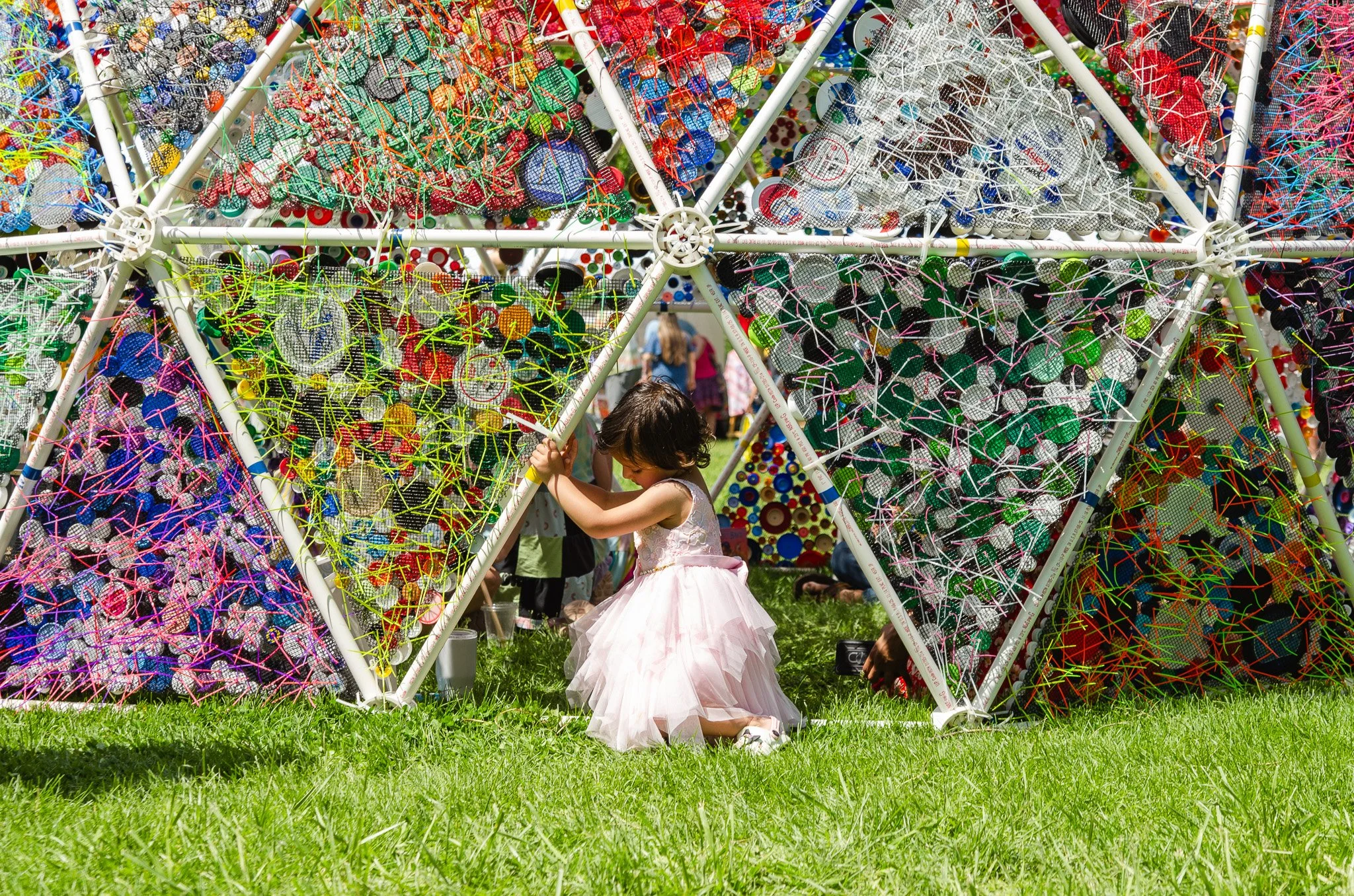
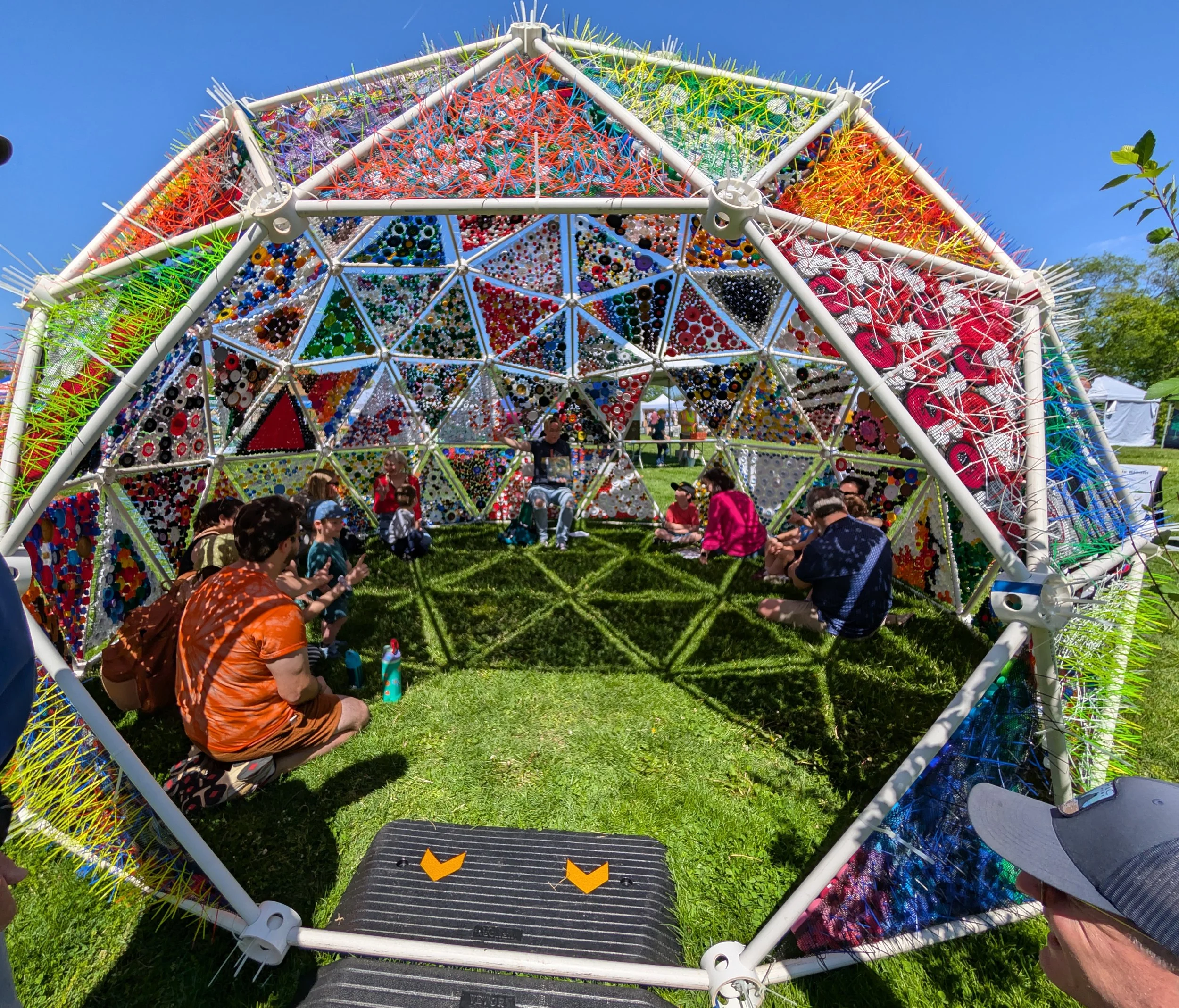
River Dome, seen below, is a 10' × 17' geodesic dome covered in post-consumer plastic collected and primarily fabricated in Nashville through community participation, with additional material and fabrication support from St. Louis. Commissioned by Artville Nashville, the work was sited at Music City Walk of Fame Park in downtown Nashville.
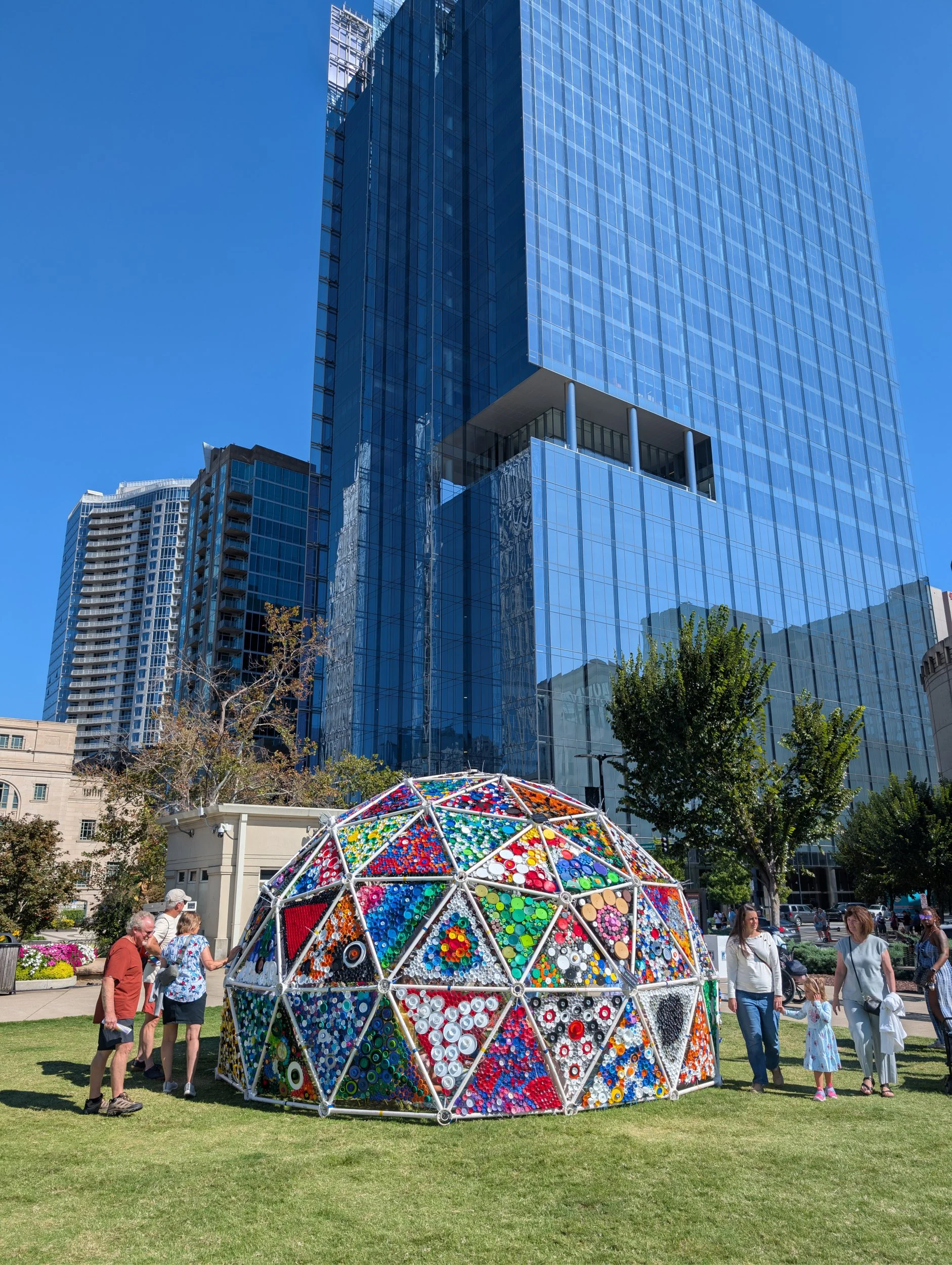
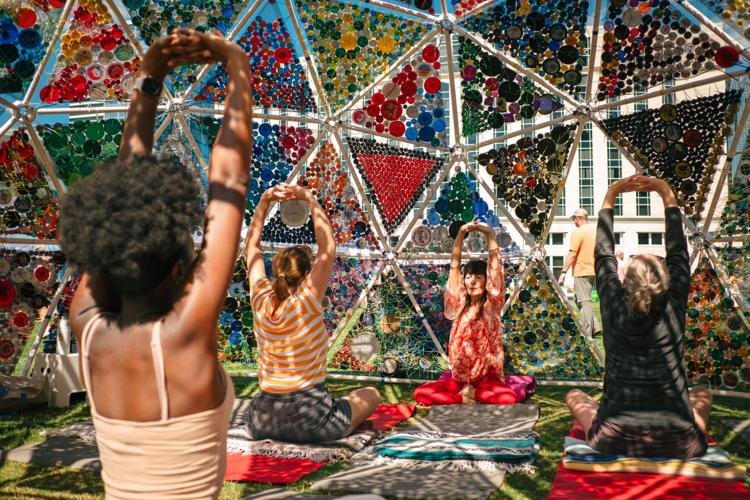
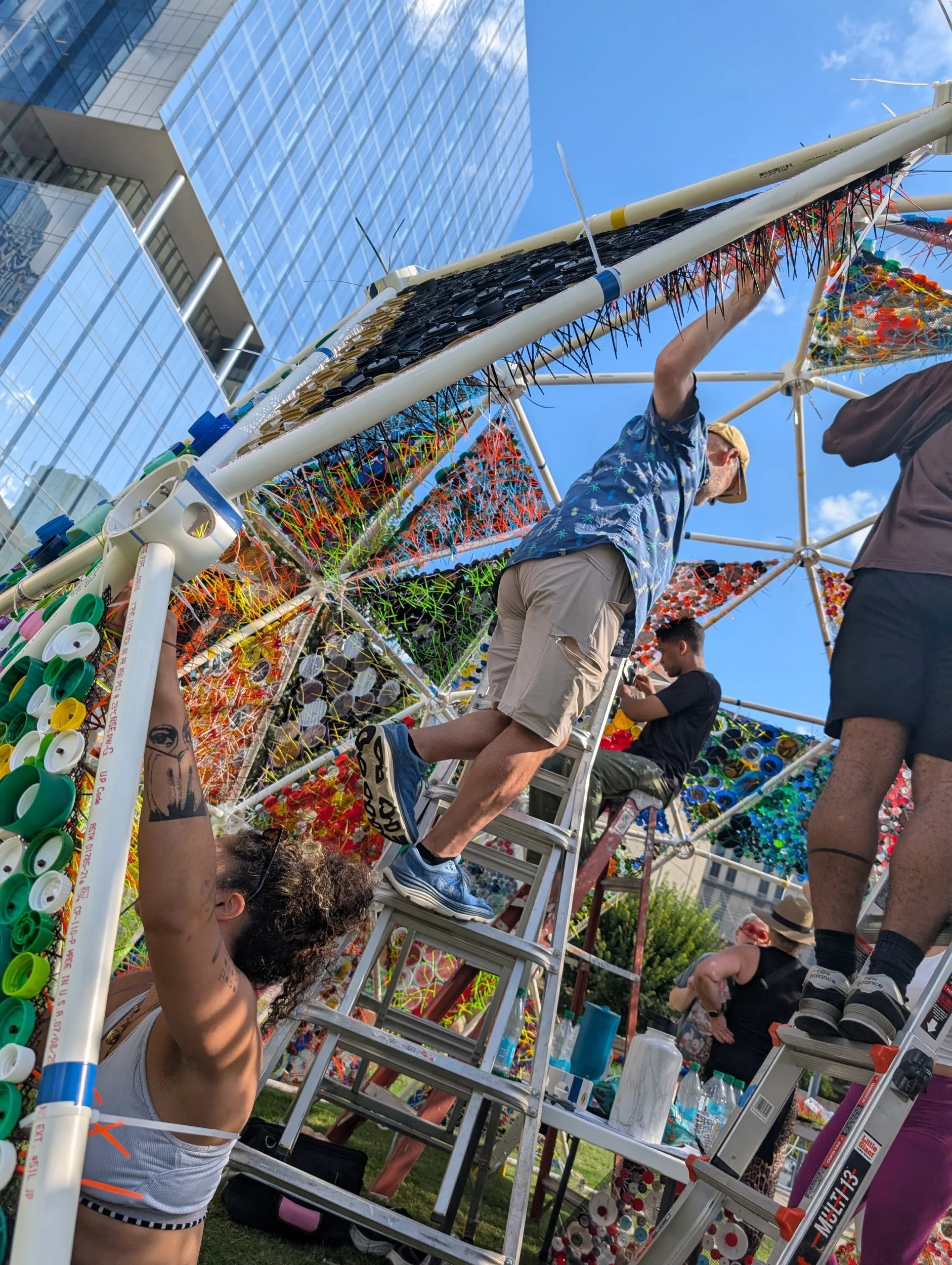
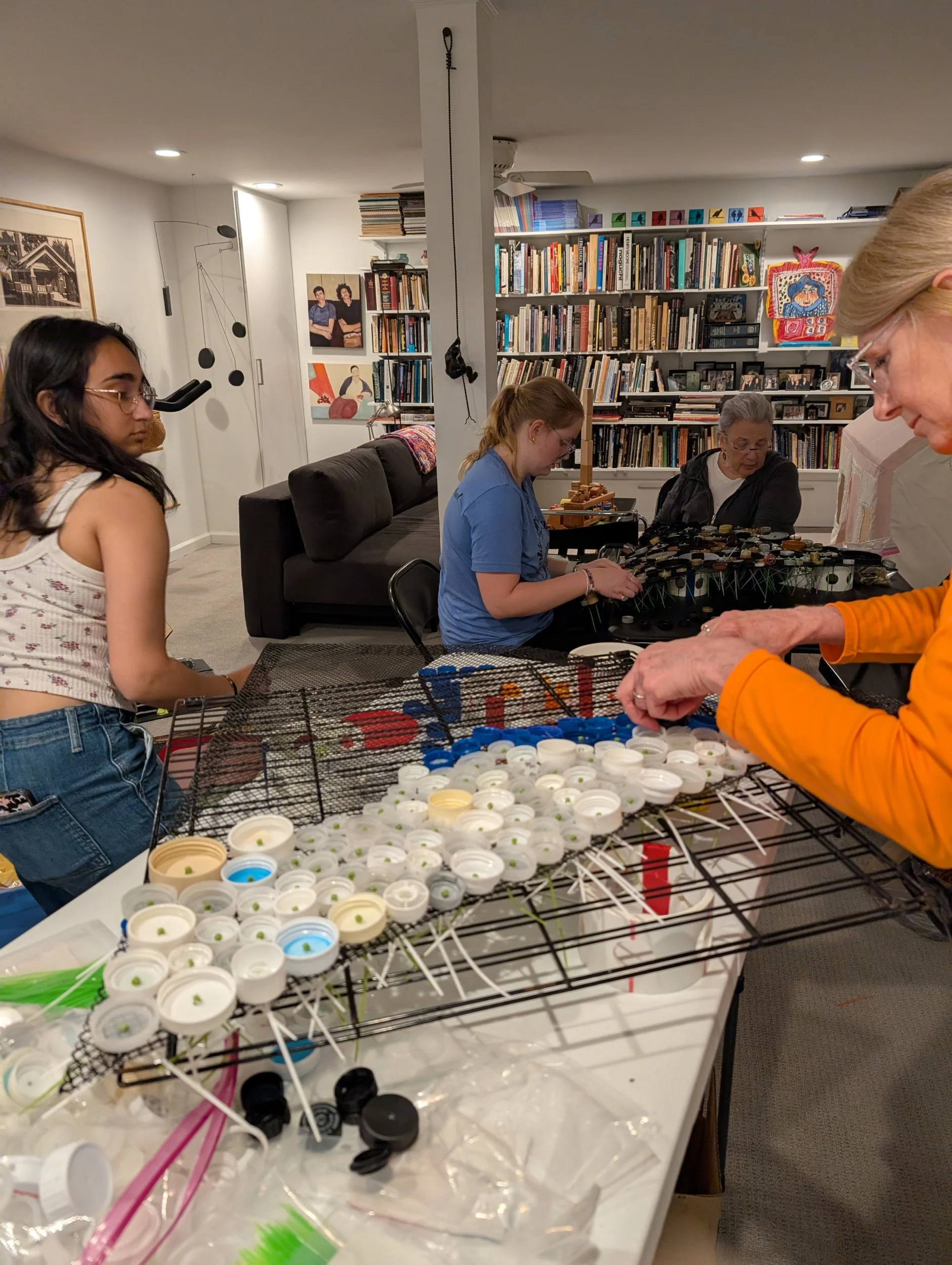
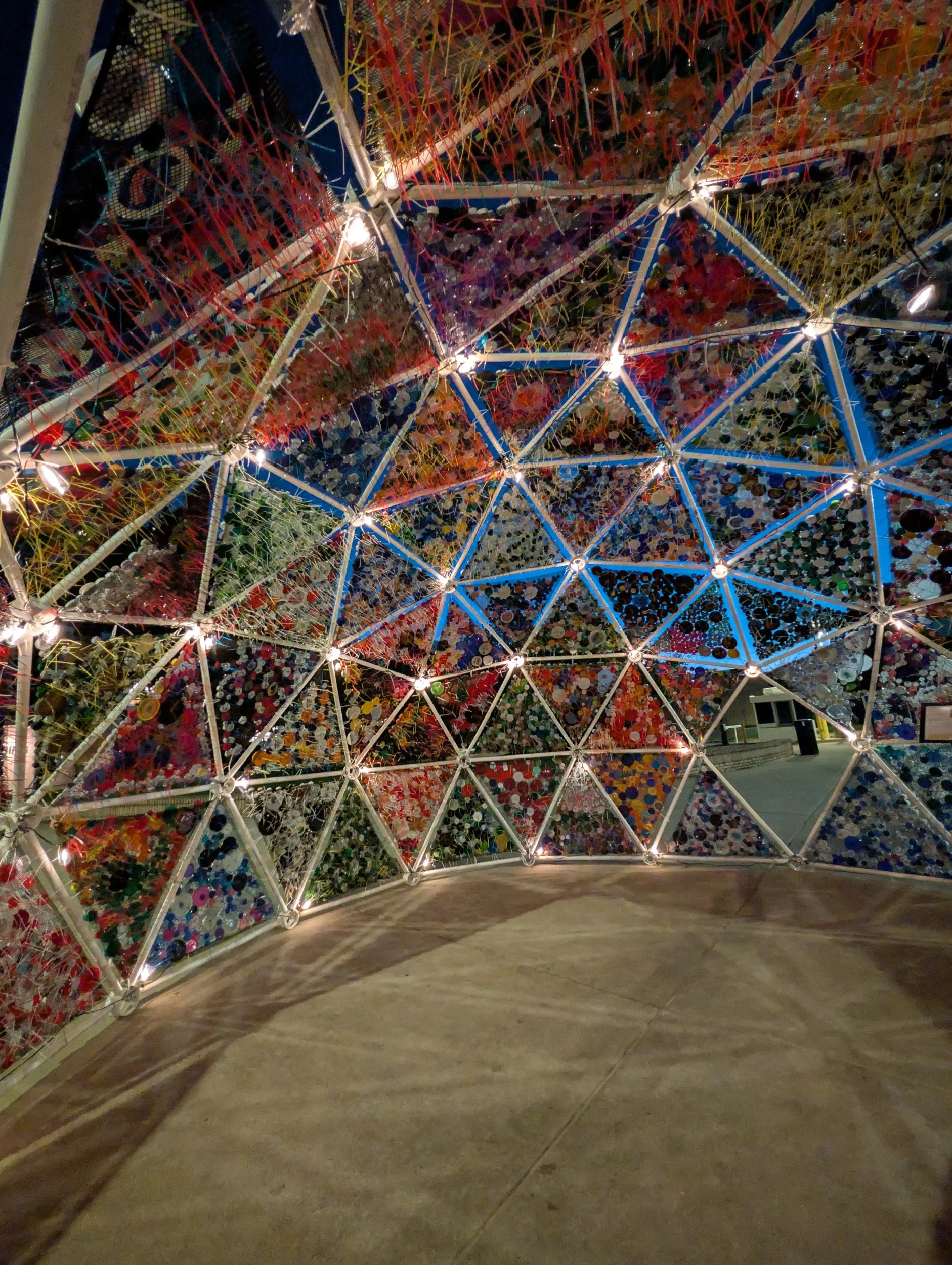
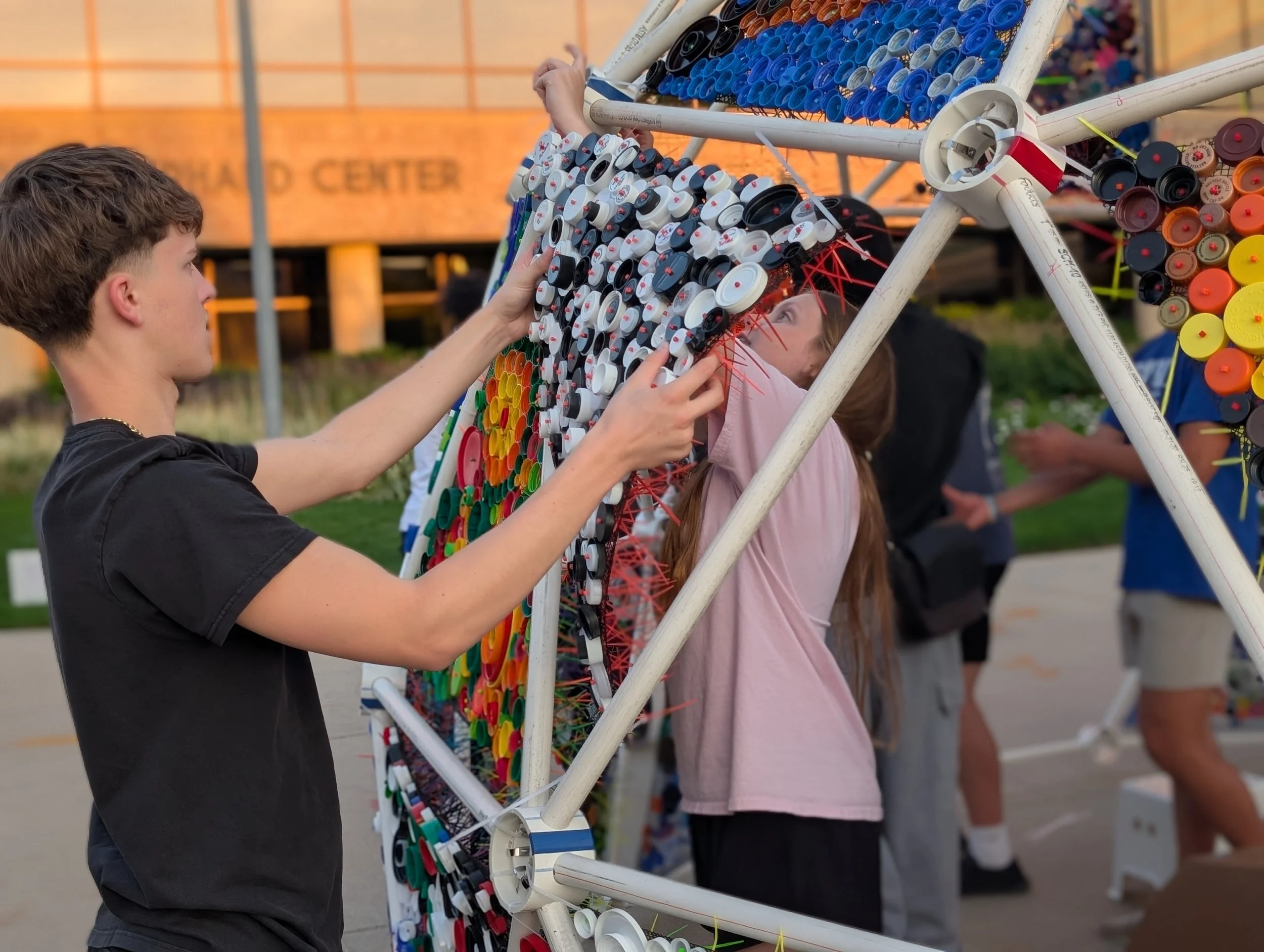
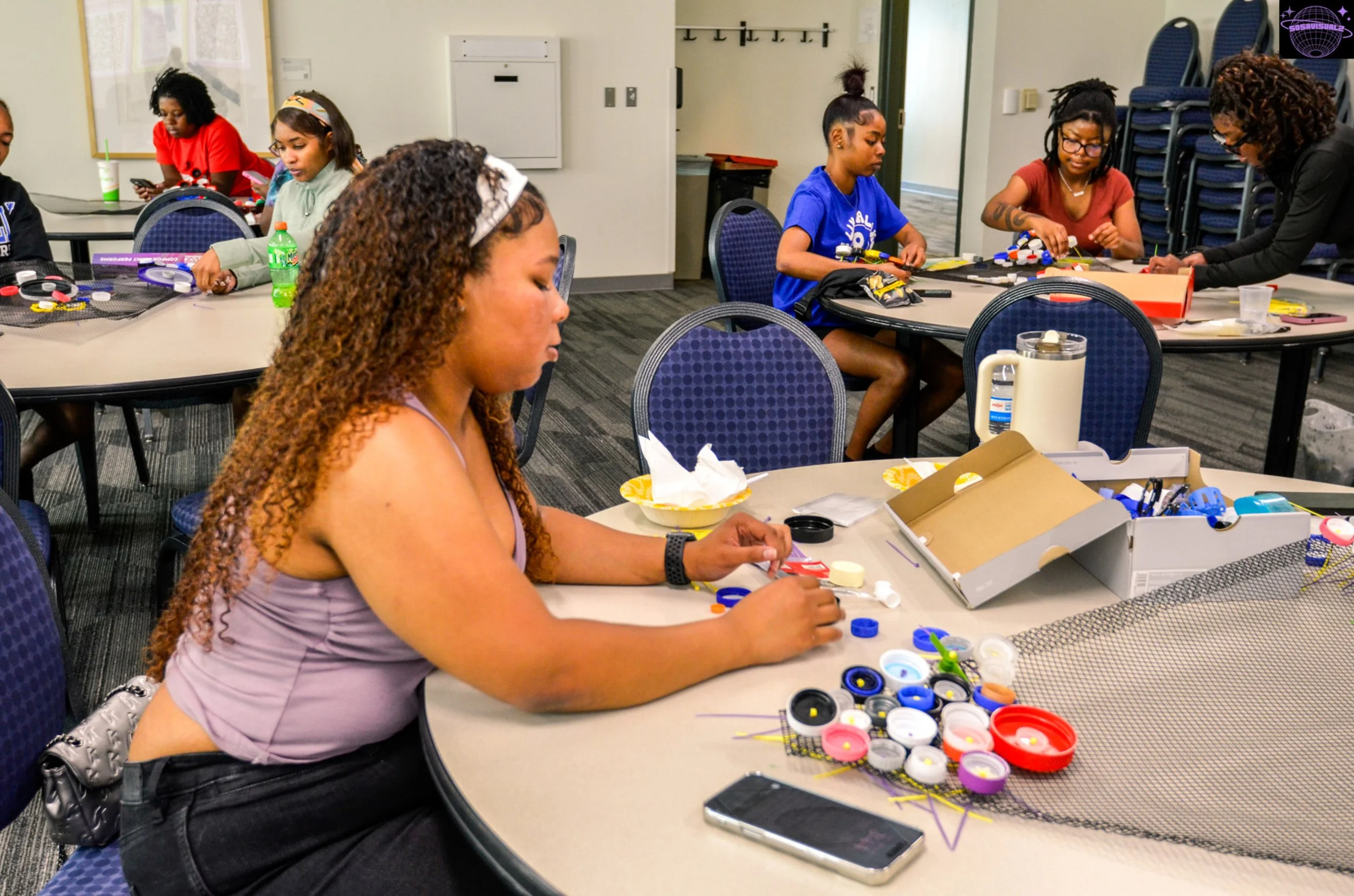
Within the Make Waves initiative, projects unfold through interconnected phases, from community collection and fabrication to public activation and use. Images document the collaborative build process, workshops, and moments of gathering within the completed installations. Participation is embedded within the structure of the work itself, where individual contributions accumulate into larger perceptual and environmental systems. Together, these phases reveal the work not as a static object, but as a living structure shaped through collective care, engagement, and transformation over time.
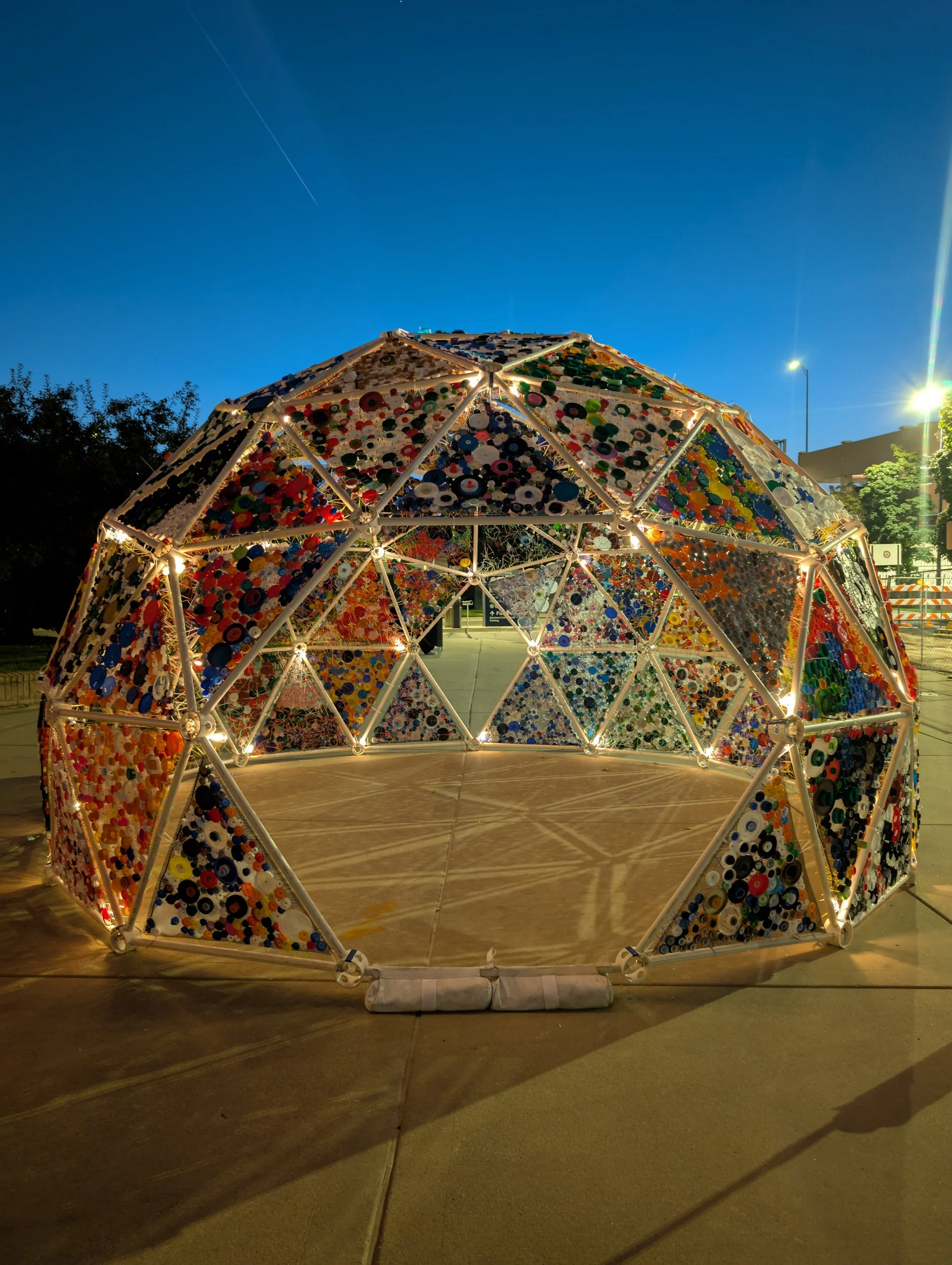
Grand Dome, as seen below, was installed at the Grand Valley State University Art Museum’s Eberhard Center as the featured work for ArtPrize in Grand Rapids. It is a large-scale geodesic dome, illuminated by solar lighting. Constructed from post-consumer plastic collected and primarily fabricated in Michigan, the installation serves as both a sculptural presence and a public gathering space. Nighttime views and interior details emphasize how the layered surfaces filter light, inviting sustained attention and collective presence.
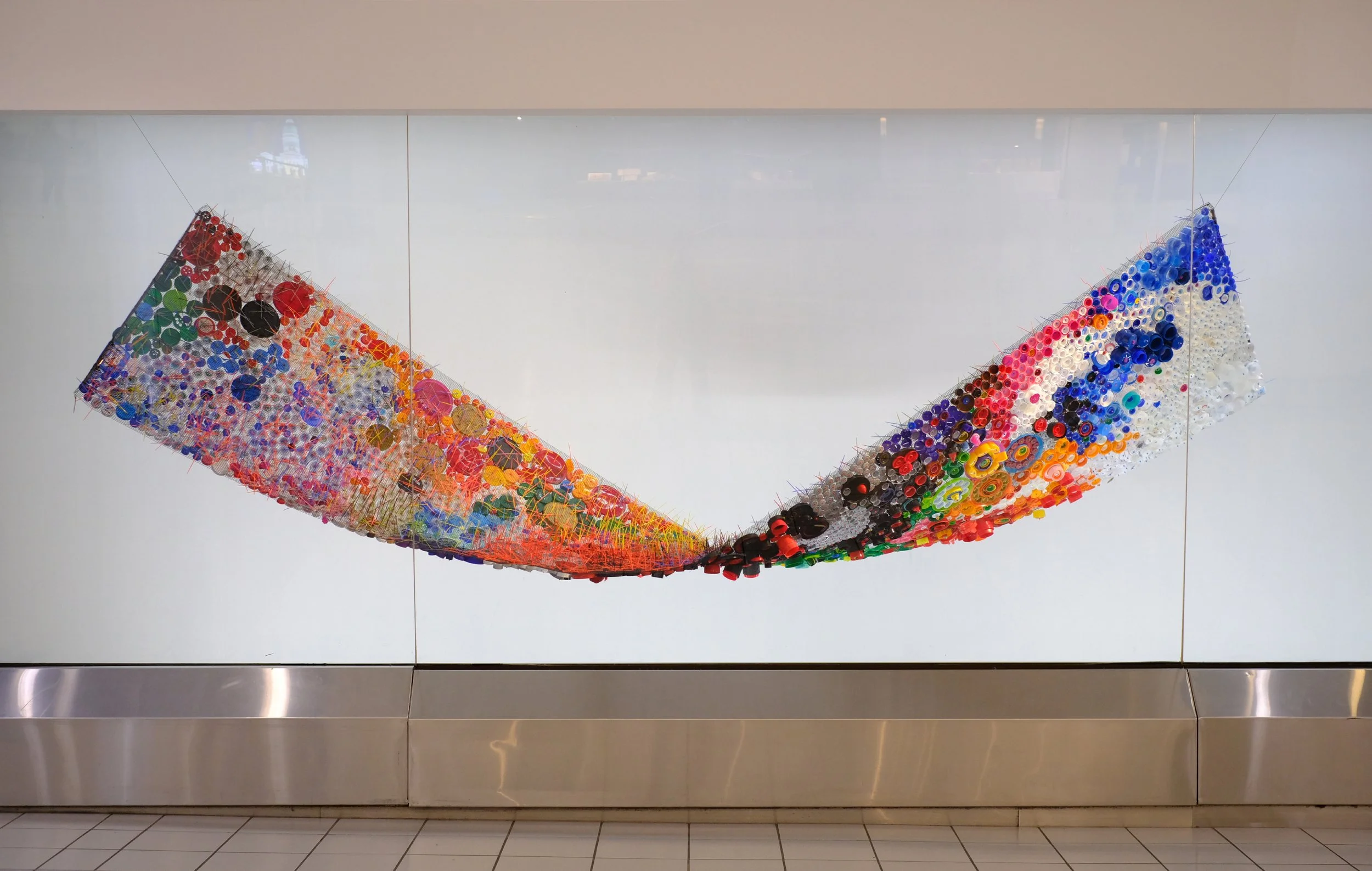
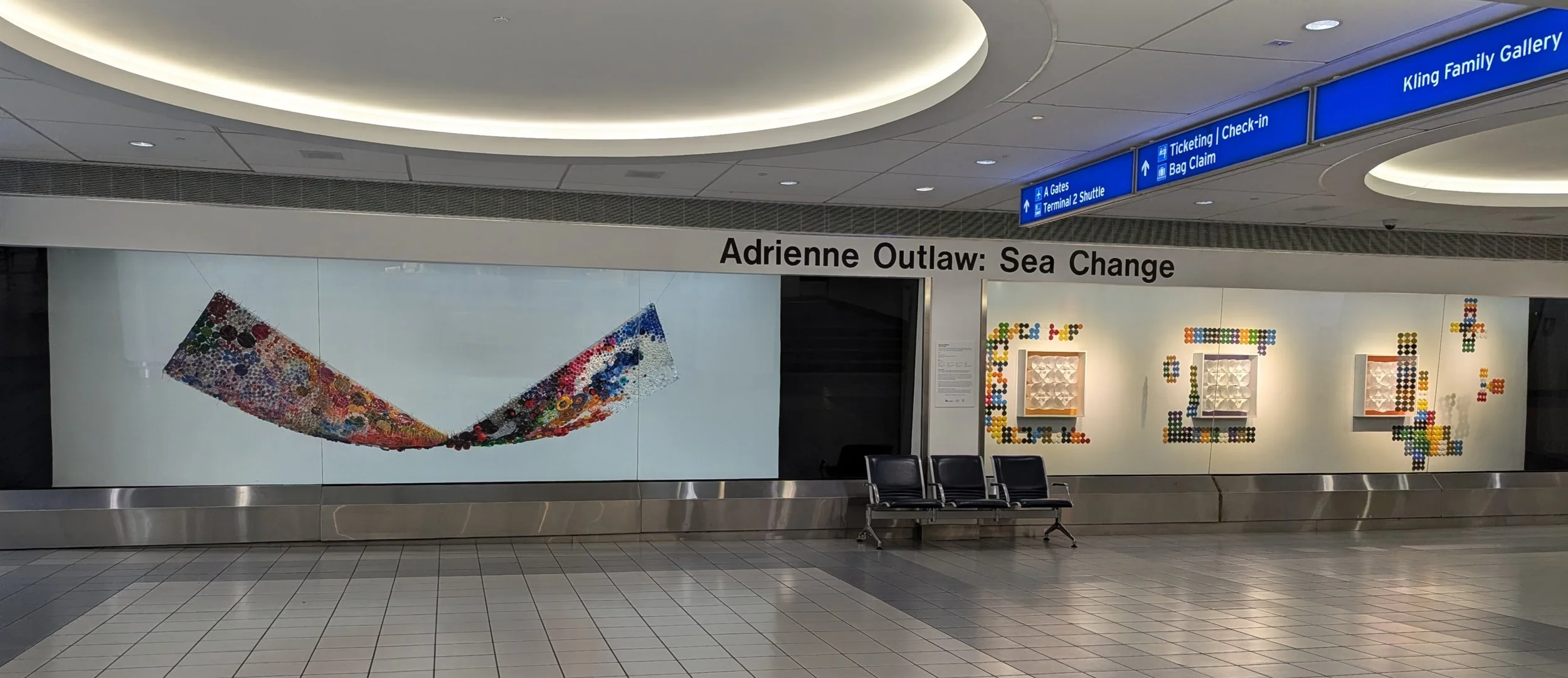
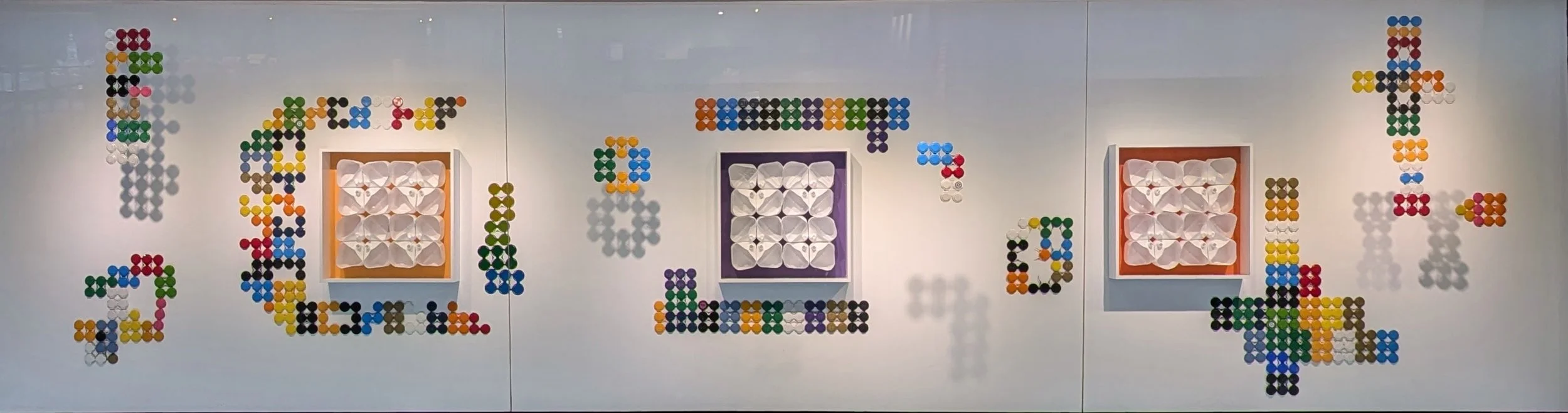
Sea Change – St. Louis Lambert International Airport
Sea Change, shown below, is a 60’ installation commissioned for the St. Louis Lambert International Airport. It was the first Make Waves public art project, made and fabricated with community-collected post-consumer plastic. The video best shows the perceptual shift that happens as travelers pass by the work.